
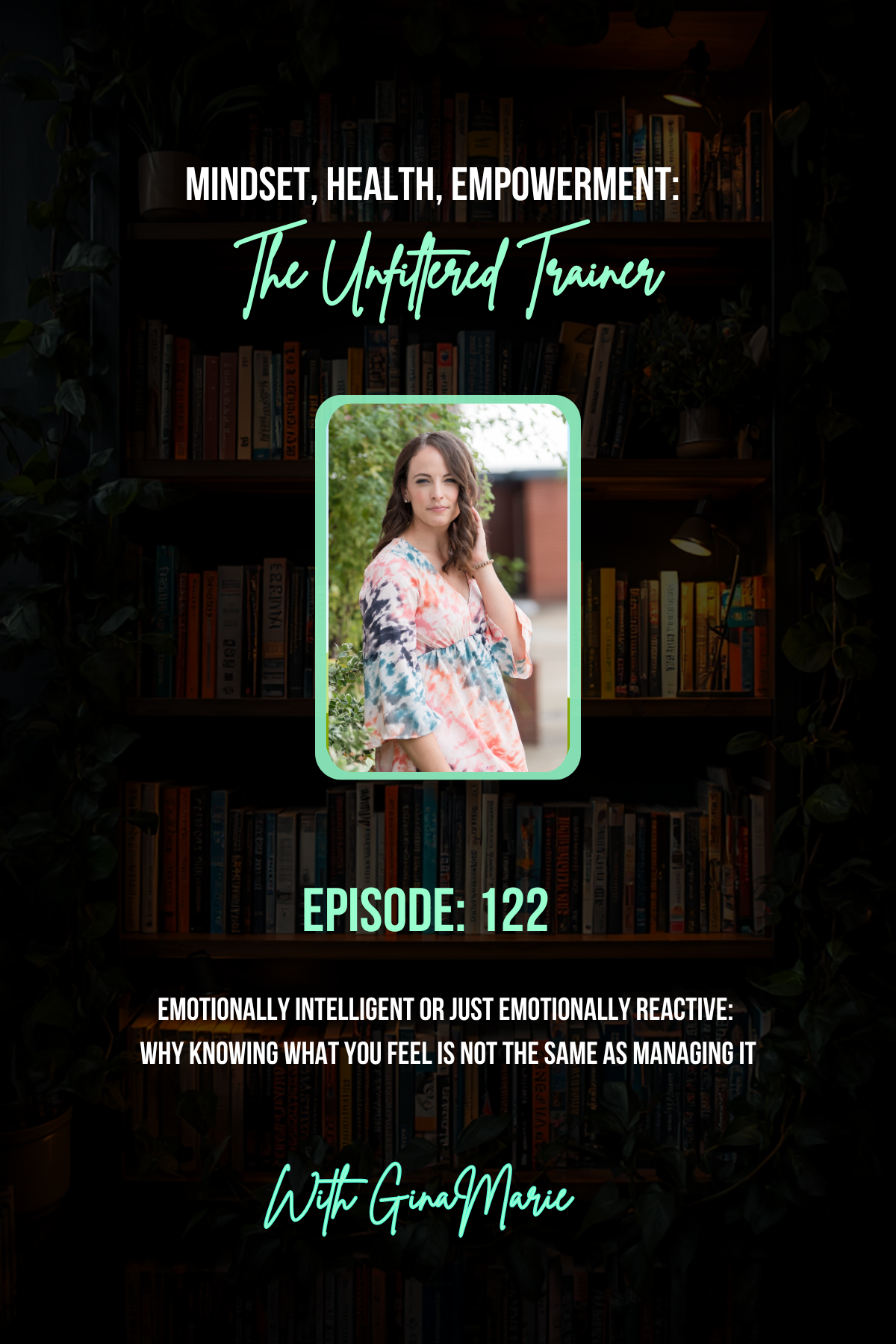
Why knowing what you feel is not the same as managing it.
Do you consider yourself emotionally intelligent?
Most people would say yes. And most of those same people have sent an email they immediately regretted. Have made a decision that felt crystal clear in the moment and looked completely different three days later. Have repeated a relationship pattern they could see clearly from the outside and still could not stop from the inside.
Here is what nobody told you. Being aware of your emotions and being intelligent about them are not the same thing. Knowing what you feel is step one. What you do with that knowledge is the actual skill. And most people have never been taught that part.
What emotional intelligence actually is
Emotional intelligence has four components. Recognizing your own emotions. Understanding where they come from and what they are telling you. Managing them in a way aligned with your values. And applying that same skill to your relationships with others. Most people who describe themselves as emotionally intelligent are strong in the first component and underdeveloped in the rest. Awareness is the foundation. It is not the building. And confusing the two is exactly why so many self-aware people are still regularly derailed by their emotional responses.
The distinction that matters most is the difference between emotional awareness and emotional regulation. You can be extremely aware of your emotions and completely unable to regulate them. They are different muscles. And the wellness and personal development space has spent enormous time developing awareness and almost no time developing regulation.
What emotional reactivity actually looks like
In high achievers emotional reactivity rarely looks like a tantrum. It is sophisticated enough to pass as strategy, logic, or even wisdom in the moment. It looks like certainty. The emotion comes first and the rational case gets built around it after. Both feel equally clear and justified. The tell is almost always in the aftermath when the emotional charge has dissipated and the decision looks different in the light of a calmer day.
The difference between a reaction and a response comes down to one thing. The pause. A reaction bypasses the rational brain and comes directly from the emotional brain before conscious thought has time to weigh in. A response has a deliberate gap between the feeling and the action. That gap is where emotional intelligence actually lives. And it is a skill that can be built.
Why managing emotions is not the same as suppressing them
This is the distinction most people get wrong. A lot of high achievers mistake emotional management for suppression. Push it down. Keep going. Handle it later. And suppression works in the short term. The long-term cost is significant. Everything that gets suppressed eventually surfaces somewhere else at a moment that feels disproportionate to the trigger because it is carrying the weight of everything that was never processed.
Processing an emotion is a specific thing. It means naming it precisely rather than vaguely. Neuroscience shows that specifically labeling an emotion reduces its intensity in the brain. Not I feel bad but I feel ashamed. Not I am upset but I am afraid of being abandoned. The specificity gives the rational brain something to work with that vague distress does not. It also means feeling the emotion in the body rather than only analyzing it in the mind. And understanding what the emotion is telling you before deciding what to do with that information.
What building the skill actually looks like
Three things that are immediately applicable regardless of where you are starting from.
The pause. The deliberate creation of a gap between what you feel and what you do with it. Not suppression. Not analysis. Just enough space for conscious choice to enter the conversation before the action happens. This is a muscle and it builds through practice in small ordinary moments.
Name it to tame it. Specifically labeling an emotion reduces the amygdala’s threat response and activates the prefrontal cortex. The more precise the label the more effective the regulation. This is not a mindset exercise. It is a neurologically grounded practice that changes the emotional experience in real time.
And then there is the longer work. Progress in emotional intelligence is not linear. The goal is a shorter feedback loop between the reaction and the recognition. First you notice a week later. Then a day later. Then in the moment. Every increment matters. And the quality of decisions and relationships changes gradually in ways that are unmistakable over time even when they are hard to attribute to any single moment.
This episode connects directly to everything covered recently about the nervous system and this season of life. Because the nervous system work and the emotional intelligence work are the same project approached from two different angles. And understanding both changes how you move through your own experience.
Full episode linked above. New episodes every Tuesday. Subscribe so you never miss one.